Tuesday, August 17, 2010

Beautiful Places in USA on Your Desktop


Gateway Arch, St Louis, Missouri, USA


Gateway Arch, St Louis, Missouri, USA


Golden Gate Bridge From Baker Beach, San Francisco, California, USA


Lady Liberty, USA


Moon Over Mount Rushmore, South Dakota, USA


Scout Sculpture, Kansas City, Missouri, USA


Seattle Space Needle, Washington

Amazing Places


Wednesday, August 11, 2010

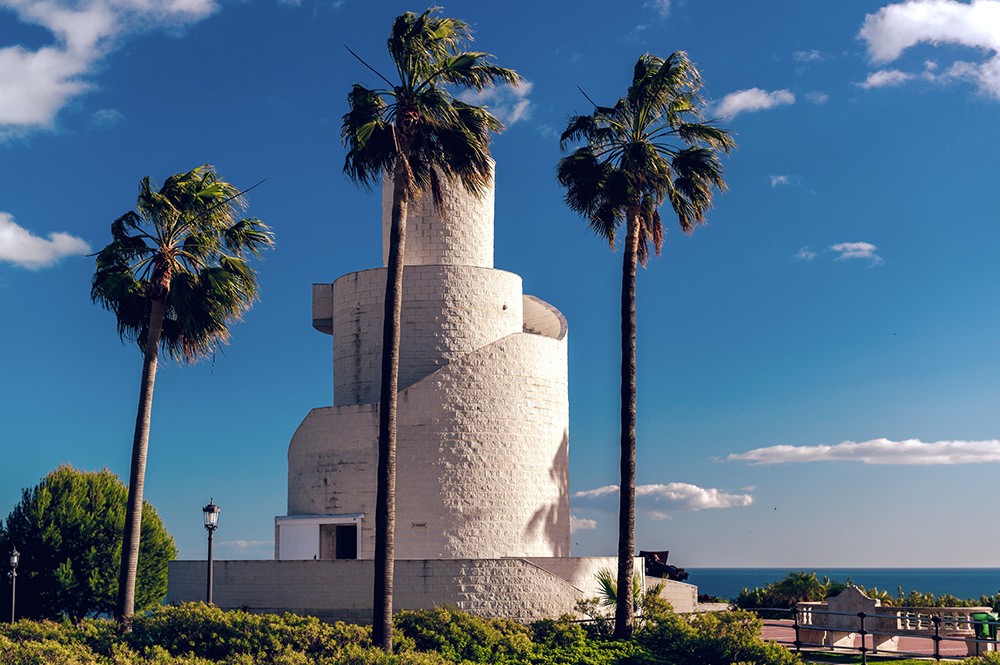
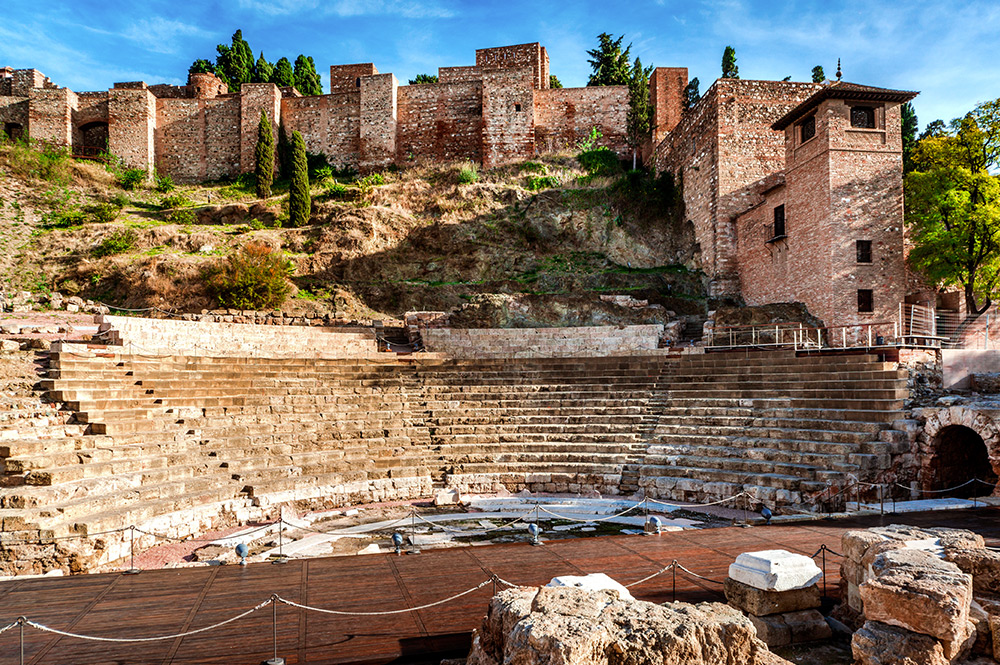
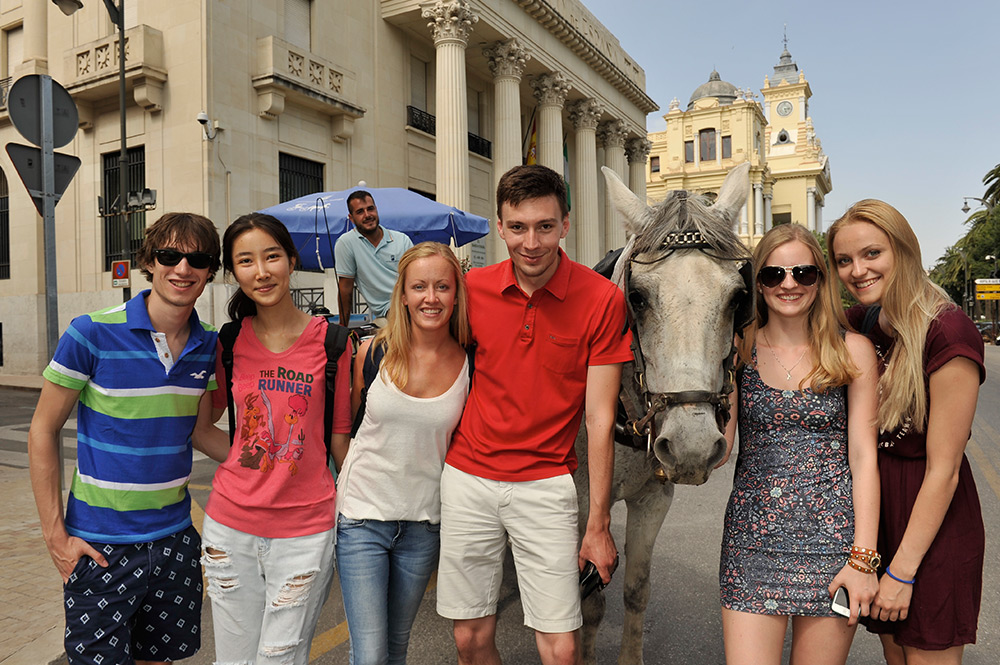
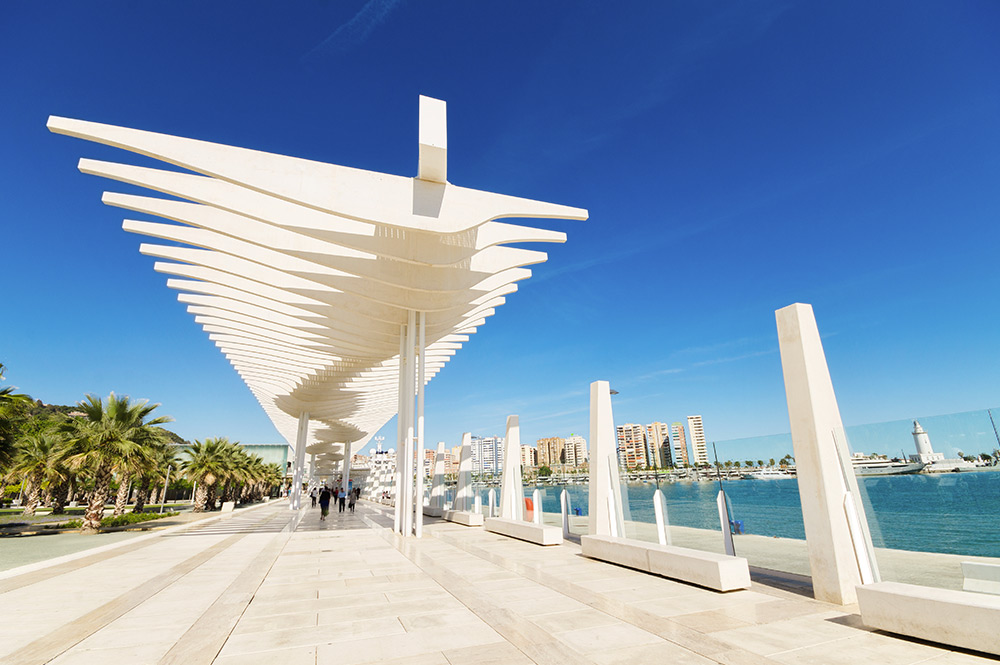
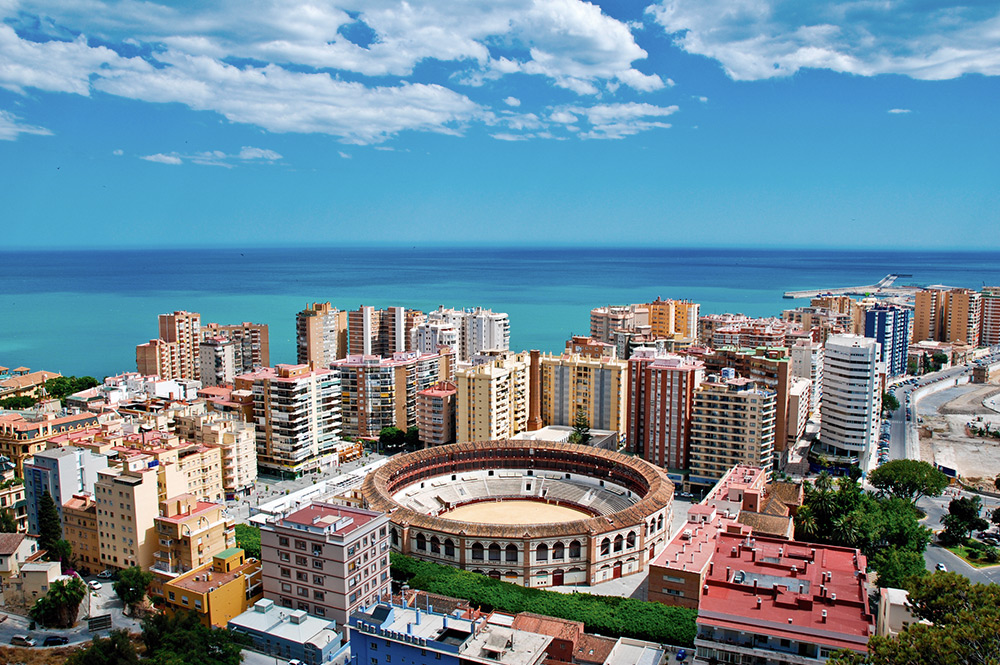
Malaga city

malaga city
malaga
malaga city
malaga
malaga

Istanbul (Greek

Istanbul (Greek: Konstantinoupolis, historically Byzantium and later Constantinople) is Turkey's most populous city, and its cultural and financial center. The city covers 25 districts of the Istanbul province. It is located at 41° N 29° E, on the Bosphorus strait, and encompasses the natural harbor known as the Golden Horn, in the northwest of the country. It extends both on the European (Thrace) and on the Asian (Anatolia) side of the Bosphorus, and is thereby the only metropolis in the world which is situated on two continents. In its long history, Istanbul (Constantinople) served as the capital city of the Roman Empire (330-395), the Byzantine Empire (395-1204 and 1261-1453), the Latin Empire (1204-1261), and the Ottoman Empire (1453-1922). The city was chosen as joint European Capital of Culture for 2010. The "Historic Areas of Istanbul" were added to the UNESCO World Heritage List in 1985.

Wednesday, July 28, 2010

belgium antwerp Origin of the name

History

Origin of the name

According to folklore, and as celebrated by the statue in front of the town hall, the city got its name from a legend involving a mythical giant called Antigoon who lived near the river Scheldt. He exacted a toll from those crossing the river, and for those who refused, he severed one of their hands and threw it into the river Scheldt. Eventually, the giant was slain by a young hero named Brabo, who cut off the giant's own hand and flung it into the river. Hence the name Antwerpen, from Dutch hand werpen—akin to Old English hand and wearpan (= to throw), that has changed to today's warp

In favour of this folk etymology is the fact that hand-cutting was indeed practised in Europe, the right hand of a man who died without issue being cut off and sent to the feudal lord as proof of main-morte. However, John Lothrop Motley argues that Antwerp's name derives from an 't werf (on the wharf). Aan 't werp (at the warp) is also possible. This 'warp' (thrown ground) would be a man made hill, just high enough to remain dry at high tide, whereupon a farm would be built. Another word for werp is pol (hence polders).

The most prevailing theory is that the name originated in the Gallo-Roman period and comes from the Latin antverpia. Antverpia would come from Ante (before) Verpia (deposition, sedimentation), indicating land that forms by deposition in the inside curve of a river. Note that the river Scheldt, before a transition period between 600 to 750, followed a different track. This must have coincided roughly with the current ringway south of the city, situating the city within a former curve of the river.


Sunday, July 25, 2010

Histroy of the hong kong ocean park


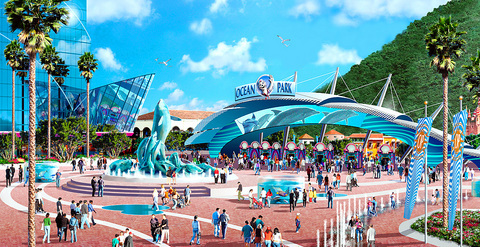
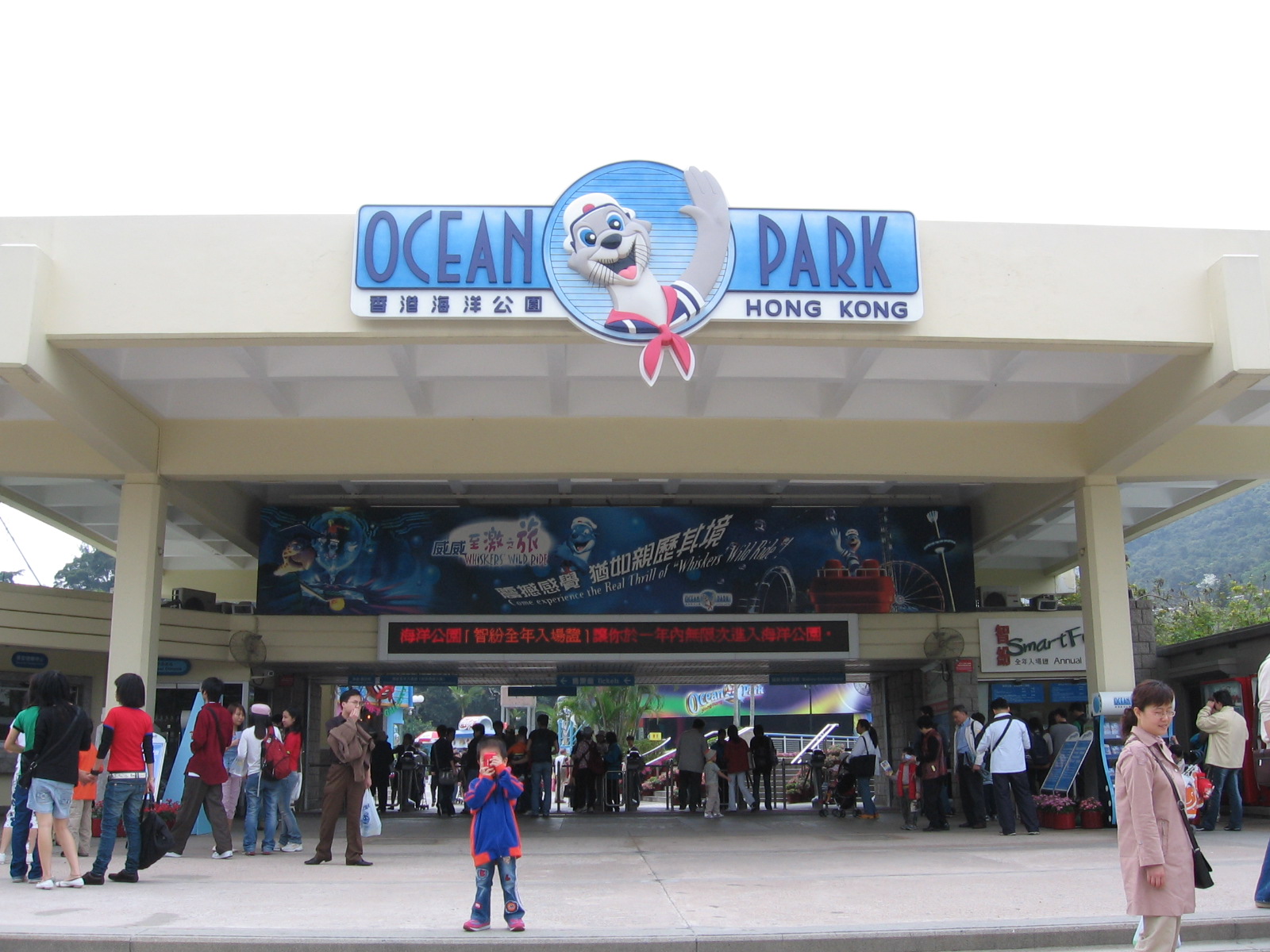
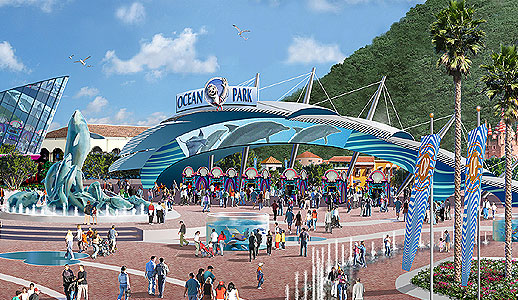
Ocean Park Hong Kong (Chinese: 香港海洋公園), commonly known as Ocean Park, is a marine mammal park, oceanarium, and animal theme park, situated in Wong Chuk Hang and Nam Long Shan in the Southern District of Hong Kong. Founded in 1977 by the then Governor of Hong Kong Sir Murray MacLehose, Ocean Park has now grown to about 35 attractions and rides. The park has won several awards, including The World's Seventh Most Popular Amusement Park and 33rd Most Visited Tourist Attractions in the World by Forbes.

In fiscal year 2007/2008, Ocean Park received 5.03 million visitors awarding it the position of the world's number 15 theme park by annual attendance ahead of rival Hong Kong Disneyland's 4.5 million visitors. Covering an area of 870,000 square metres of land, the park is separated by a large mountain into two areas, The Summit (Headland) and The Waterfront (Lowland) respectively. The areas can be reached by a 1.5 km long cable car system, a shuttle bus, or the Ocean Express (train). As the Headland comprises several hills, visitors can also opt to take the world's second longest outdoor escalator.

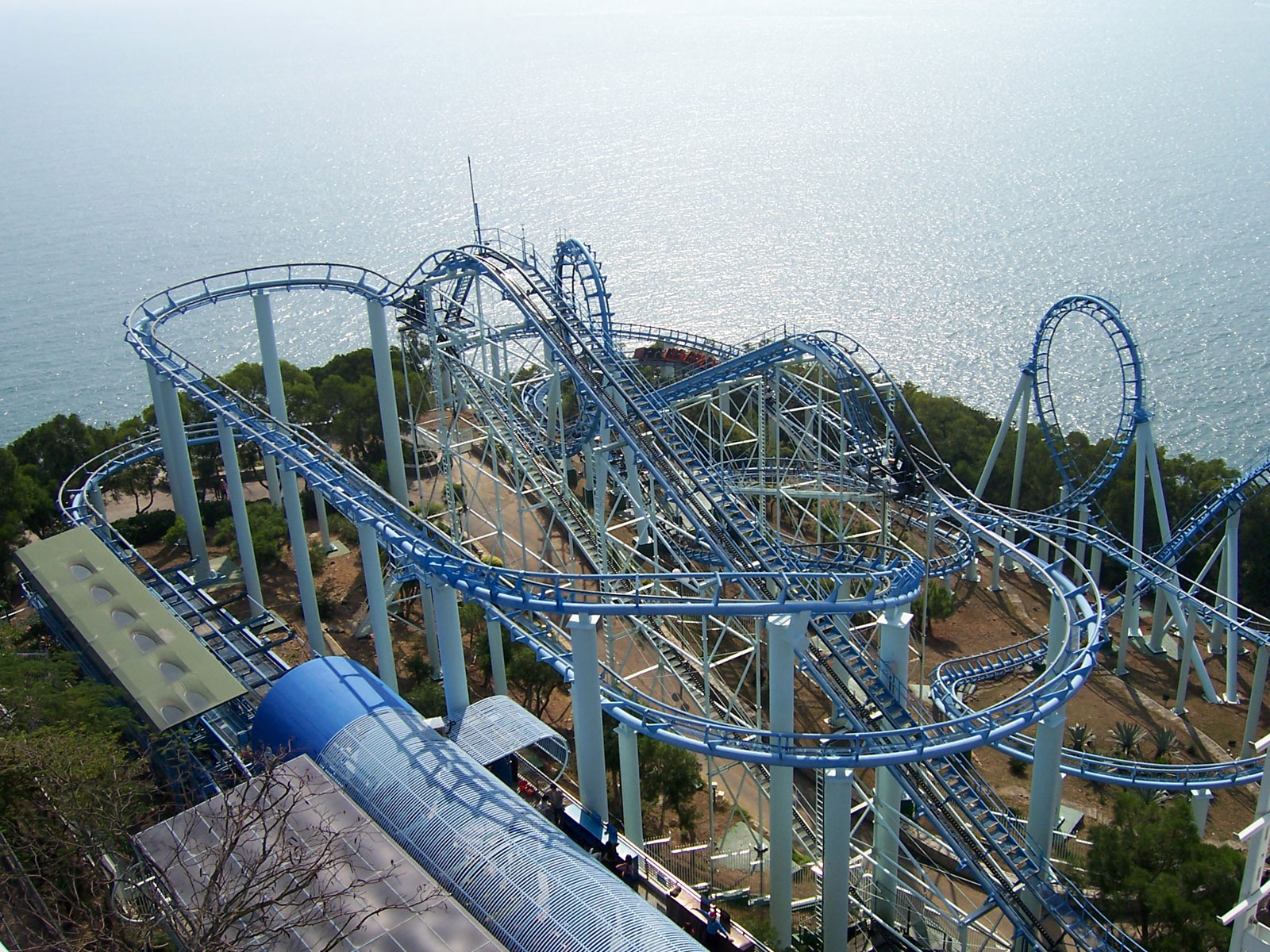
The theme park currently has 19 rides, including two rollercoasters, but also houses 11 animal exhibits, such as a Giant panda habitat, a jelly fish and Chinese sturgeon aquarium, as well as a four-story aquarium displaying more than 2,000 fish.

Besides being an amusement park, Ocean Park Hong Kong also operates observatories, well developed laboratories, an education department and a Whales and Dolphins Fund.

Ocean Park Hong Kong was the first institution in the world to have success in artificial insemination of bottlenose dolphins, and developed numerous new breeds of goldfish.

In September 2007, Ocean Park Hong Kong increased its ticket prices by 12% and 14% to take advantage of the Golden Week Holidays.

In July 2009, Ocean Park Hong Kong announced that they would increase their ticket prices by 20% and 25% to pay a loan.

History

Opened on 10 January 1977 by the then Governor of Hong Kong, Sir Murray MacLehose, Ocean Park was constructed with HK$150 million funded by The Hong Kong Jockey Club on land was provided free by the Hong Kong Government. Between 1982 and 1984, The Hong Kong Jockey Club allocated a further HK$240 million into developing facilities at Tai Shue Wan and thrill rides at the Summit.

Ocean Park ceased to be a subsidiary of the Hong Kong Jockey Club on 1 July 1987, becoming its own statutory body, with a Government-appointed Board. The Hong Kong Jockey Club established a HK$200 million trust to ensure the Park’s continued development. At present, Ocean Park is managed by the Ocean Park Corporation, a financially-independent, not-for-profit organisation.


Saturday, July 24, 2010

most beautiful par in the world pics

ocean park
ocean park
ocean park
ocean park
ocean park
ocean park
ocean park